

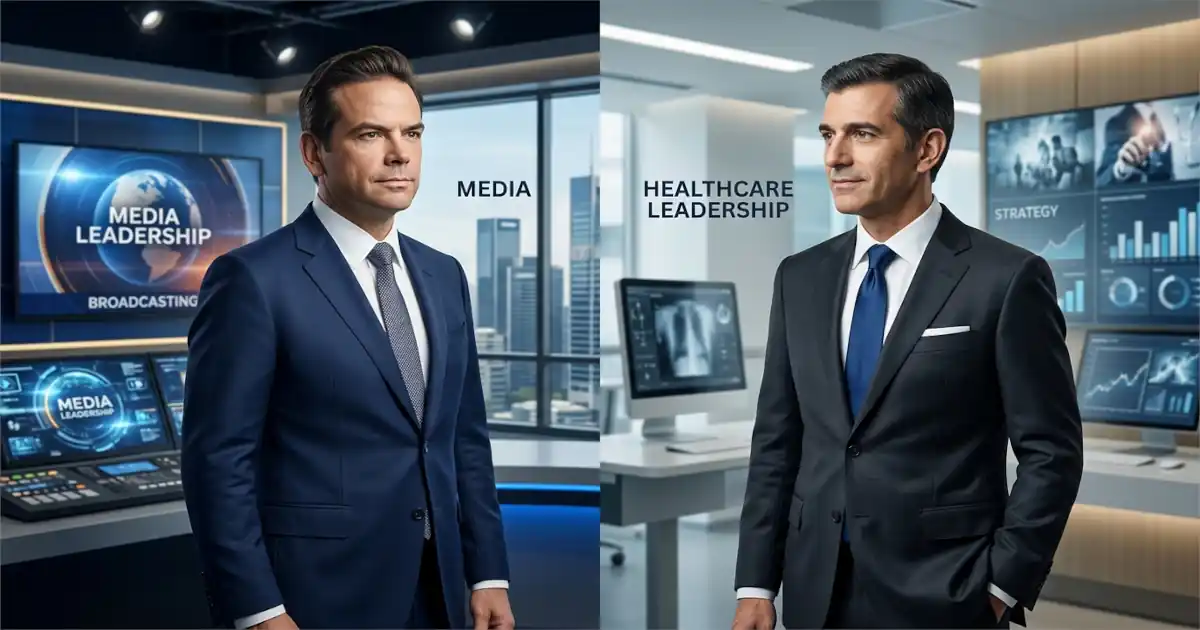
Corporate America rarely pairs a media mogul with a healthcare executive. Yet Lachlan Murdoch and David Cordani offer a compelling study in contrast. One built his career atop a global media empire. The other spent decades reshaping a healthcare giant from within. Their industries differ sharply, but their leadership stories reveal useful lessons. This article examines their backgrounds, career paths, and leadership philosophies side by side.
Who Is Lachlan Murdoch?
Lachlan Keith Murdoch was born on September 8, 1971, in London. He is the eldest son of media magnate Rupert Murdoch. Lachlan spent part of his childhood in New York City. He later moved to Australia to study at Princeton and pursue business interests there. He began his career working in printing plants and newsrooms. This hands-on approach gave him practical knowledge of the media industry. He rose through News Corporation in the 1990s, eventually running News Limited in Australia. He later served as Deputy Chief Operating Officer of News Corporation.
Murdoch stepped away from the family business briefly in the mid-2000s. He pursued independent ventures, including radio and investment projects in Australia. He returned to the fold and rejoined the News Corp board. Today, he serves as Executive Chair and CEO of Fox Corporation. He also holds the role of Chair at News Corp. His leadership spans television, film, and digital publishing assets worldwide.
Who Is David Cordani?
David M. Cordani was born on February 10, 1966, in Waterbury, Connecticut. He grew up in a working-class household that valued discipline and effort. Cordani earned a bachelor’s degree in accounting and finance from Texas A&M University. He later completed an MBA at the University of Hartford. He joined Cigna in 1991, starting in a mid-level operational role. Over nearly two decades, he moved steadily up the corporate ladder.
Cordani became President of Cigna in 2008. He took over as Chief Executive Officer in 2009. Under his leadership, Cigna transformed from a traditional insurer into a global health services company. Annual revenue grew from roughly $18 billion to about $275 billion during his tenure. Customer relationships expanded from 46 million to more than 180 million worldwide. In March 2026, Cigna announced his planned retirement as CEO. Cordani transitioned to Executive Chair of the board on July 1, 2026. Brian Evanko succeeded him as Chief Executive Officer.
Lachlan Murdoch and David Cordani: Contrasting Career Paths
The career arcs of these two executives diverge in almost every respect. Murdoch inherited proximity to power through family connections. Cordani built his position gradually through internal promotion at one company. Murdoch’s early exposure to media came naturally through his father’s empire. Cordani’s path required him to prove himself without a famous surname. Despite these differences, both men eventually reached the top of major public companies. Both also weathered periods of significant industry disruption during their careers.
Murdoch navigated the shift from print and broadcast to streaming media. Cordani guided Cigna through the upheaval caused by the Affordable Care Act. Both leaders adapted their companies to survive rapid technological and regulatory change. This adaptability marks a shared trait between two otherwise unrelated executives.
Leadership Style and Corporate Philosophy
Lachlan Murdoch is known for a measured, low-key public presence. He rarely grants interviews and avoids unnecessary media attention. His decisions tend to favor consolidation and long-term brand control. Fox Corporation’s strategy under his watch has centered on live sports and news programming. He has resisted some industry trends toward aggressive streaming expansion, choosing selective partnerships instead.
David Cordani built a reputation as a data-driven, operationally focused executive. He emphasized affordability and personalized care throughout his tenure at Cigna. Cordani frequently spoke publicly about healthcare policy and industry reform. He positioned Cigna as a company willing to engage directly with regulators. His approach favored expansion into pharmacy benefits and health services beyond traditional insurance.
Why People Compare Lachlan Murdoch and David Cordani
Search interest in Lachlan Murdoch and David Cordani often stems from broader curiosity about executive leadership. Readers researching corporate succession sometimes encounter both names in business news roundups. Lists of influential American executives frequently feature both men in different sections. Neither leader has a documented direct business relationship with the other. Their paths intersect mainly through general coverage of Fortune 500 leadership trends.
Business analysts sometimes group both leaders together in year-end executive rankings. These lists typically highlight top earners or influential figures across industries. Such rankings explain much of the combined search traffic for both names. Readers should understand this pairing reflects categorization rather than any real-world partnership.
Family, Succession, and Public Scrutiny
Succession planning defines a major chapter in both men’s stories. Murdoch’s role within the Murdoch family trust generated years of public attention. Legal disputes among Rupert Murdoch’s children drew global media coverage. Lachlan ultimately secured control over the family’s media voting shares in 2024. This outcome cemented his position as the primary heir to the Fox and News Corp legacy.
Cordani’s succession unfolded differently, following a structured corporate transition plan. Cigna’s board announced years of preparation before naming Brian Evanko as successor. Cordani remained involved as Executive Chair rather than departing the company entirely. This gradual handover reflects standard practice among large, publicly traded corporations. Both transitions, though different in nature, show how leadership changes shape company direction.
Financial Achievements and Company Growth
Under Cordani, Cigna’s transformation produced substantial shareholder returns. Total shareholder return increased by more than 750 percent during his tenure. The company expanded into pharmacy services through its Evernorth division. This diversification reduced Cigna’s reliance on traditional health insurance premiums alone.
Fox Corporation, under Murdoch’s leadership, focused on maintaining profitable cable news and sports assets. The company avoided some of the costly streaming wars that strained rival media firms. Fox News remained a dominant ratings leader throughout his tenure as CEO. This financial discipline has kept Fox Corporation’s balance sheet comparatively strong.
Lessons From Lachlan Murdoch and David Cordani
Aspiring executives can draw several lessons from studying these two leaders. First, patience matters, even for leaders with obvious advantages. Murdoch spent years in operational roles before ascending to the top job. Second, adaptability determines long-term survival in disrupted industries. Cordani repeatedly repositioned Cigna’s business model as healthcare regulations shifted. Third, public restraint can protect a leader’s reputation during turbulent periods. Murdoch’s limited media presence shielded him from some public controversy.
Fourth, structured succession planning benefits shareholders and employees alike. Cordani’s transition to Executive Chair preserved institutional knowledge within Cigna’s leadership. Fifth, family legacy and personal merit are not mutually exclusive paths to power. Murdoch’s story shows how heritage and hands-on experience can combine effectively.
Industry Challenges Each Leader Faced
Media and healthcare both face intense regulatory scrutiny in the United States. Murdoch’s companies have navigated antitrust concerns tied to media consolidation. Regulators have questioned the market power held by large broadcast and cable groups. Fox Corporation has also faced defamation litigation connected to its news coverage. These legal battles carried significant financial and reputational stakes for the company. Murdoch’s handling of such disputes shaped public perception of his leadership.
Cordani faced a different set of regulatory pressures throughout his tenure. Healthcare insurers operate under close supervision from state and federal agencies. The Affordable Care Act reshaped how insurers priced and structured coverage plans. Cigna had to adjust its business model to remain compliant and competitive. Cordani also confronted public criticism over insurance claim denial practices. Industry-wide scrutiny of health insurers intensified following high-profile incidents in recent years. Cordani responded by emphasizing transparency initiatives and expanded customer support programs.
Both executives operated in industries where public trust directly affects business performance. Media companies depend on audience trust to maintain advertising revenue and subscriptions. Health insurers depend on customer trust to retain enrollment and avoid regulatory penalties. This shared vulnerability forced both leaders to prioritize reputation management alongside financial performance.
Communication Styles and Public Perception
Executives shape public perception through how often, and how, they communicate. Murdoch generally avoids extensive press interviews or public speaking engagements. He allows company results and strategic moves to speak for themselves. This restrained communication style has drawn both praise and criticism from industry observers. Supporters view it as disciplined, while critics call it overly guarded.
Cordani took a more visible approach throughout his career at Cigna. He appeared regularly at healthcare conferences and industry panels. He published opinion pieces addressing healthcare affordability and system reform. This visibility positioned him as a recognizable voice within the health insurance sector. Cordani’s willingness to engage publicly contrasted sharply with Murdoch’s more private approach.
These differing communication strategies reflect the demands of their respective industries. Media executives often prefer letting content and ratings drive public narrative. Healthcare executives frequently need direct engagement to address policy debates and consumer concerns. Neither approach is inherently superior, but each fits its industry’s expectations.
Frequently Asked Questions
Do the two executives work together?
No public record shows a direct business partnership between them. Their names appear together mainly in general executive comparison articles.
What industries do they lead?
Murdoch leads Fox Corporation, a major media and broadcasting company. Cordani led Cigna, a global health services organization, until mid-2026.
Are they still active in their companies?
Murdoch continues as Executive Chair and CEO of Fox Corporation. Cordani now serves as Executive Chair of Cigna’s board.
Conclusion
Lachlan Murdoch and David Cordani represent two distinct models of American corporate leadership. One inherited proximity to influence and grew into it through experience. The other climbed methodically through a single company over decades. Their industries could not differ more sharply, spanning media and healthcare. Yet both men demonstrate how discipline, adaptability, and strategic patience drive lasting success. Studying their careers offers valuable insight for anyone pursuing executive leadership today.
READ ALSO: TheSpoonAthletic Fitness Tips: Your Complete Guide to a Healthier Lifestyle





Leave a Reply