

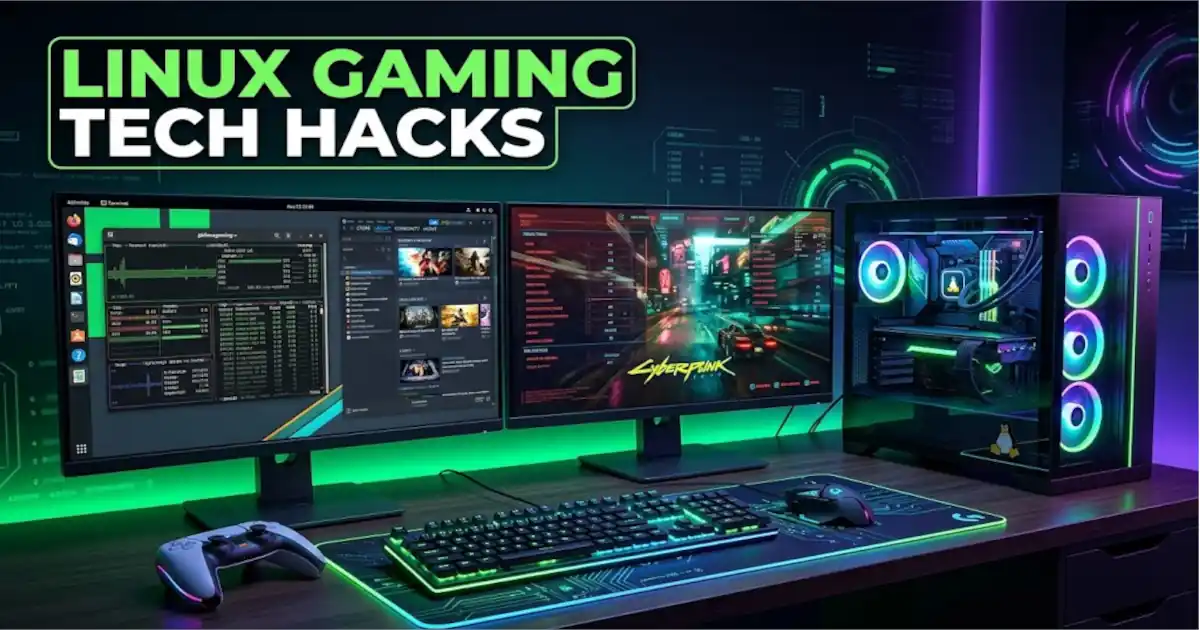
Linux gaming has grown fast in recent years. Players now run thousands of Windows titles on open-source systems. Steam Proton, Vulkan drivers, and community tools drive this growth. This guide explains the tech hacks pblinuxgaming fans use to boost speed, stability, and comfort. You will learn practical steps for drivers, kernels, compatibility layers, and hardware tuning. Each tip uses free tools and works on popular distributions. Test every change, measure the results, and enjoy smoother frames on your own machine.
Why Linux Gaming Deserves Your Attention
Linux no longer sits at the edge of the gaming world. Valve, hardware makers, and volunteer developers have transformed the platform. Today, a mid-range PC can run modern games well without any Windows license. The system also respects your privacy and gives you full control over updates.
The Rise of Proton and the Steam Deck
Proton changed everything for Linux players. Valve built it on Wine and added translation layers for DirectX. These layers convert Windows graphics calls into Vulkan calls. The Steam Deck proved the idea at scale and pushed developers to fix compatibility issues. Many studios now test their games on Linux before launch.
Benefits of an Open-Source Gaming Setup
An open-source setup offers real advantages. You avoid forced restarts during a match. You remove bloatware that wastes memory and processor time. This control translates directly into steadier frame rates and lower input delay.
Choose the Right Distribution
Your distribution shapes the entire gaming experience. Some distros ship with gaming tools ready to use. Others favor stability and require more manual setup. Pick the one that matches your skill level and hardware.
Gaming-Focused Distributions
Several distributions target gamers directly. Nobara, Bazzite, and Pop!_OS install graphics drivers and codecs out of the box. They also include Steam, Lutris, and useful performance tweaks. Beginners save hours of setup time with these options. Bazzite even mimics the Steam Deck interface for living-room play.
Stable Distributions for Everyday Use
Ubuntu, Fedora, and Linux Mint suit players who also work on the same machine. These systems receive thorough testing before updates arrive. You can still add gaming tools with a few commands. Rolling releases like Arch and openSUSE Tumbleweed deliver newer drivers sooner. However, they demand more attention when updates break something.
Update Your Graphics Drivers
Graphics drivers decide how well your games run. Outdated drivers cause crashes, visual glitches, and poor frame rates. Always check your driver version before you blame the game.
NVIDIA Driver Tips
NVIDIA offers proprietary drivers that perform best on most cards. Install them through your distribution’s driver manager or official repositories. Avoid downloading random installers from unknown websites. After installation, reboot and confirm the driver loads with the nvidia-smi command. Enable modesetting to improve Wayland support and reduce screen tearing.
AMD and Intel Driver Tips
AMD and Intel use open-source Mesa drivers that ship with the kernel. Mesa updates arrive often and bring big performance gains. Add a trusted Mesa repository if your distribution lags behind. Newer Mesa versions fix bugs and add support for new Vulkan features.
Tune the Kernel and System Settings
Small system tweaks add up to noticeable improvements. Many tech hacks pblinuxgaming guides start with the kernel because it controls everything beneath your games. The right kernel and settings reduce stutter and improve responsiveness.
Use a Gaming-Friendly Kernel
Custom kernels like Zen and Liquorix prioritize low latency. They adjust the process scheduler to favor interactive tasks. Games benefit because the system reacts faster to your inputs. Install one through your package manager and keep the stock kernel as a fallback. Test both and compare frame times before you commit.
Adjust the CPU Governor and Swappiness
The CPU governor controls how quickly your processor raises its clock speed. Switch to the performance governor while you play. This change prevents sudden dips when the load rises. Lower the swappiness value to ten so the system avoids swapping memory to disk. Both settings take seconds to change and cost nothing.
Enable GameMode
Feral Interactive created GameMode to optimize your system on demand. It applies the performance governor and adjusts process priorities automatically. Install the package and add the gamemoderun command to your launch options. GameMode switches everything back when the game closes. Many players see steadier frame rates with this single step.
Master Proton and Wine
Compatibility layers sit at the heart of Linux gaming. Understanding them helps you fix problems quickly. A few launch options and version choices solve most issues.
Try Proton-GE for Better Compatibility
Proton-GE is a community build with extra patches and codecs. It fixes video playback issues that official Proton sometimes misses. Install it through ProtonUp-Qt in a few clicks. Select it in the Steam compatibility menu for any troublesome game. Many of the best tech hacks pblinuxgaming readers share involve swapping Proton versions until a game works.
Use Launch Options Wisely
Steam launch options unlock powerful features. Add the variable for shader pre-caching to reduce first-run stutter. Enable ESYNC or FSYNC to improve how Wine handles threads. Set the correct audio and display variables when a game misbehaves. Always change one option at a time so you can identify what worked.
Boost Frame Rates with Upscaling and Monitoring Tools
You cannot fix what you cannot measure. Monitoring tools show exactly where your bottleneck lives. Upscaling tools then help you win back lost performance.
Monitor Performance with MangoHud
MangoHud displays frame rate, temperatures, and usage in a compact overlay. It works with Vulkan and OpenGL games alike. Add the mangohud command to your launch options to enable it. Watch the frame time graph because spikes reveal stutter that averages hide.
Gain Speed with Gamescope
Gamescope is Valve’s micro-compositor and it solves many display problems. It forces specific resolutions, limits frame rates, and handles scaling cleanly. You can run a game at a lower resolution and upscale it smoothly. Gamescope also fixes odd behavior in games that dislike multi-monitor setups. Combine it with FSR to squeeze extra frames from older graphics cards.
Enable FSR and Similar Upscalers
AMD FidelityFX Super Resolution works on almost any graphics card. Proton includes a fullscreen FSR mode that needs no game support. Choose a lower in-game resolution and enable the setting. The image stays sharp while your frame rate climbs. NVIDIA owners can also use DLSS in supported titles through Proton.
Reduce Input Lag and Stutter
Smooth gameplay depends on consistent frame delivery, not only high averages. Stutter ruins competitive matches and breaks immersion in story games. A few targeted changes remove most of it.
Manage Shader Caches
Games compile shaders while you play, and compiling causes stutter. Steam downloads pre-compiled shader caches for many titles. Keep this feature enabled and give it enough disk space. Mesa and NVIDIA also keep their own caches. Never clear them unless a driver update causes visual errors.
Check Your Compositor and Sync Settings
Desktop compositors can add delay between your input and the screen. KDE Plasma lets you disable compositing while a fullscreen game runs. Wayland handles variable refresh rate better than older display servers. Enable FreeSync or G-Sync for tear-free motion without heavy input lag. Cap your frame rate slightly below your monitor’s refresh rate for the smoothest result.
Hardware Hacks That Make a Difference
Software tweaks only go so far. Your hardware sets the ceiling for performance. Smart upgrades and good habits protect that investment. Some tech hacks pblinuxgaming enthusiasts recommend involve nothing more than better airflow and cleaner cables.
Upgrade Memory and Cooling
Sixteen gigabytes of RAM is the practical minimum today. Thirty-two gigabytes gives heavy games and background apps plenty of room. Enable the XMP or EXPO profile in your BIOS to unlock rated speeds. Clean your fans every few months to prevent thermal throttling.
Troubleshoot Common Problems Quickly
Every Linux gamer meets problems eventually. A calm, methodical approach solves most of them. Start with the simplest explanation and work toward the complex ones.
First, check ProtonDB for reports on your specific game. Other players often share exact launch options that fix issues. Second, read the terminal output when a game fails to start. Error messages usually name the missing library or driver. Third, update your system and try another Proton version. Finally, ask for help on community forums and include your hardware details.
Final Thoughts on tech hacks pblinuxgaming
Linux gaming rewards curiosity and patience. The platform now offers real performance, wide compatibility, and total control. Start with a solid distribution and fresh graphics drivers. Add a tuned kernel, GameMode, and the right Proton version. Monitor your results with MangoHud and refine your settings over time.
These tech hacks pblinuxgaming players trust cost very little and deliver big gains. Apply them one at a time and keep notes on what works. Join the community, share your discoveries, and help others solve their problems. Your next gaming session could run smoother than you ever expected.
READ ALSO:Gaming News Etruesports: Your Guide to the Latest Esports and Gaming Updates









Leave a Reply